SUP for Beginners: Which Board Is Right for Me?
Melanie Boshoff · 02.09.2026
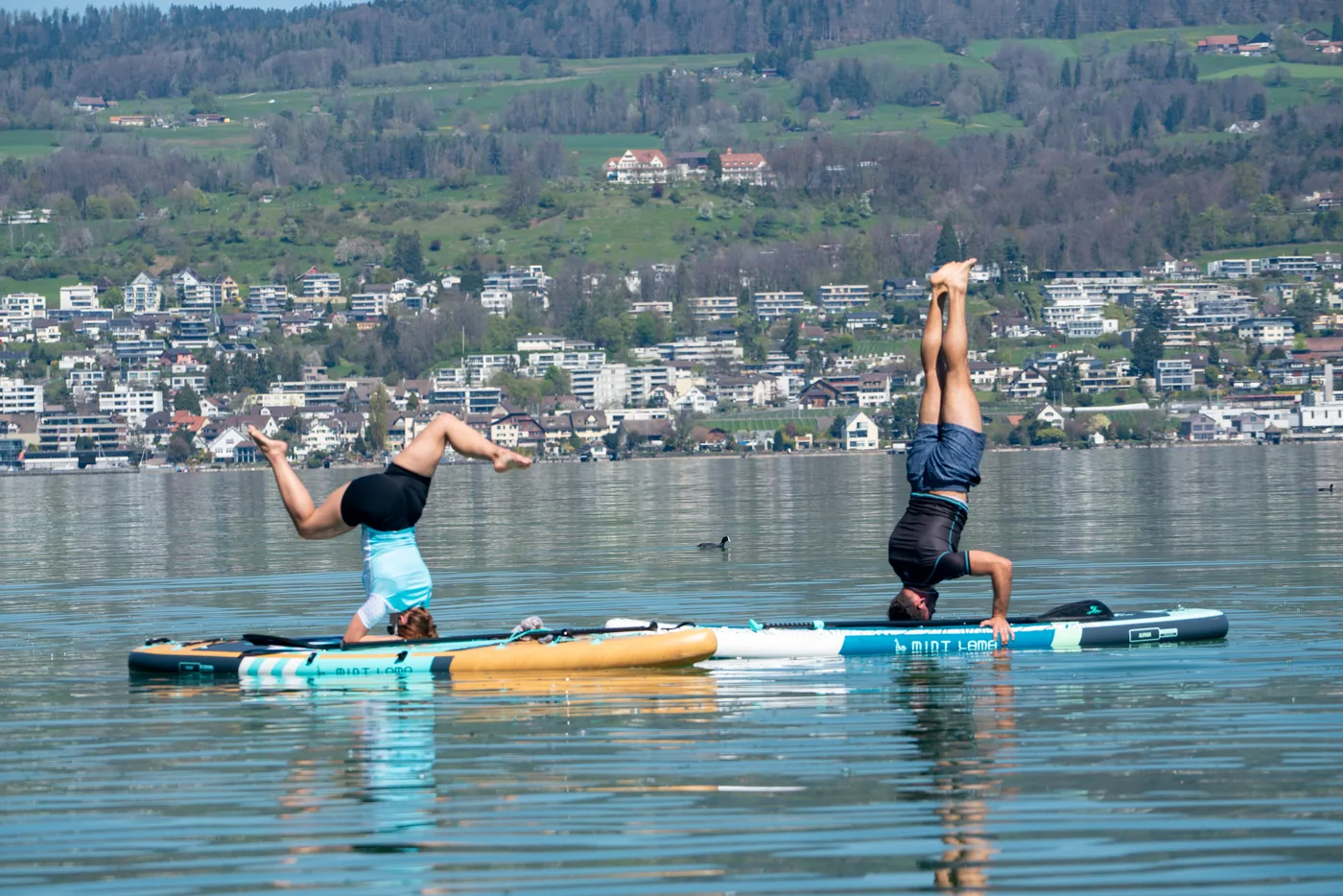
Stand-up paddleboarding (SUP) has become one of the most popular water sports in recent years. The SUP market can be overwhelming, and the quality differences between stand-up paddle boards are not always easy for beginners to recognize. As a beginner, you face the important decision of which SUP board is right for you. This choice can feel daunting, especially with so many options available. In this SUP beginner’s guide, we’ll walk you through all the key factors you should consider when buying your first paddle board.
What is Stand-Up Paddleboarding and How Does It Work?
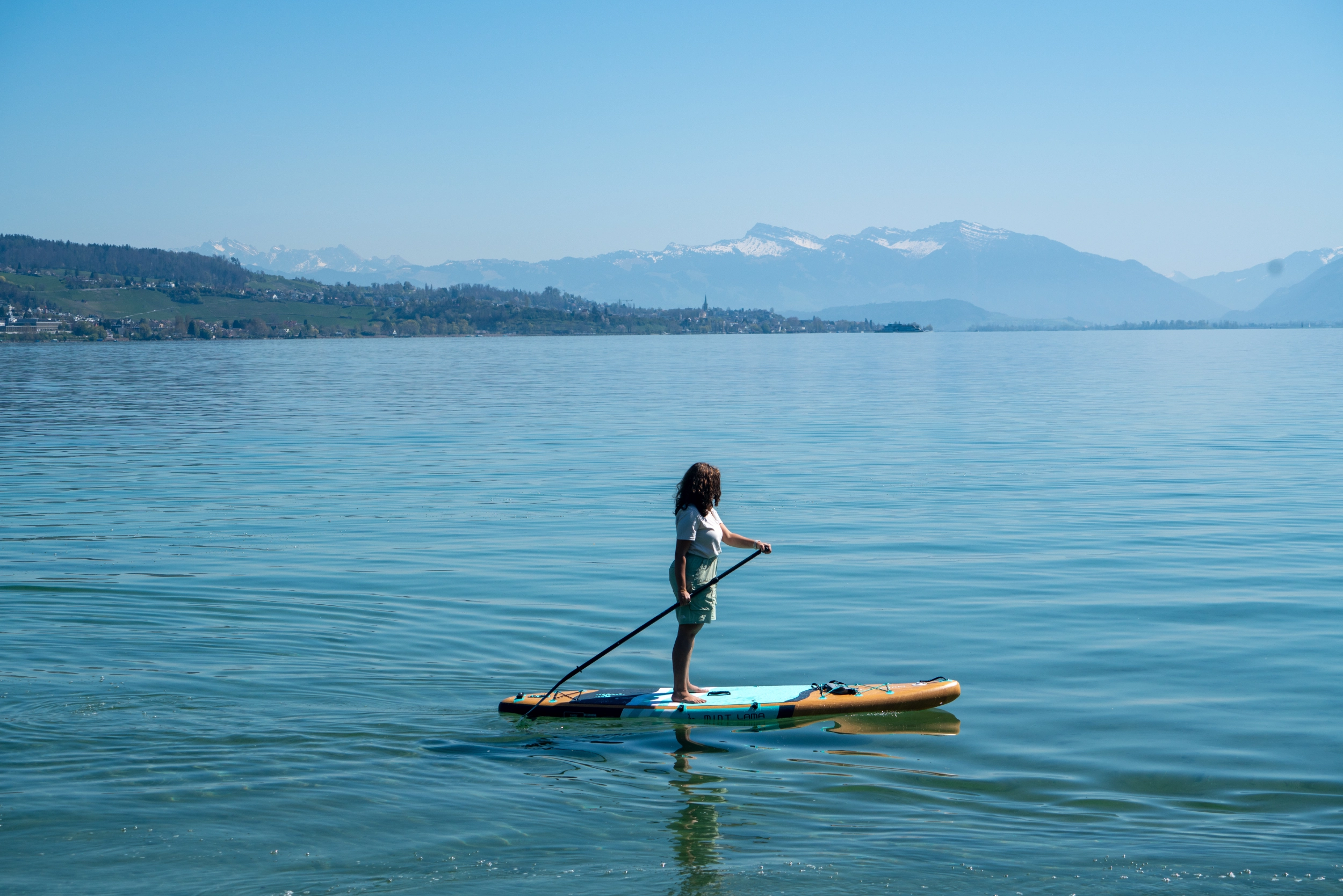
Stand-up paddleboarding (SUP) is an exciting water sport where you stand on a special board — the stand-up paddleboard — and glide through the water using a paddle. It has gained massive popularity because it’s not only fun, but also an excellent full-body workout.
A typical SUP board ranges from 2.5 to 4.5 meters in length and 70 to 90 cm in width. There are different types of SUP boards designed for specific purposes. All-round boards are ideal for beginners as they are stable and versatile. Touring boards are better for covering longer distances and offer smoother glide. Racing boards, on the other hand, are designed for speed and competition.
To paddleboard, you stand on the board, hold the paddle with both hands, and alternate strokes on either side to move forward. Good SUP technique requires a mix of strength, balance, and endurance. For beginners, it’s best to start in calm waters and light wind to build confidence.
The Basic Types of SUP Boards
If you’re asking “What type of paddle board is best for beginners?”, you’ll quickly come across two main categories: inflatable SUP boards (iSUPs) and hard boards. Inflatable SUPs are particularly recommended for beginners because they are easier to transport, more affordable, and more forgiving when you lose balance. They also require less storage space and are gentler if you fall.
Key Factors to Consider as a Beginner
When choosing your first SUP, there are several important aspects to keep in mind: board dimensions, volume, and shape. A beginner SUP should typically measure 3.0 to 3.4 meters long and 81–86 cm wide. This size provides the best balance of stability and maneuverability. Board width is especially important, as it directly affects how stable the board feels — a crucial factor for anyone just starting out.
Volume and Weight Capacity
If you’re wondering, “Which stand-up paddle board is suitable for beginners?”, the board’s volume is key. The general rule: the board’s volume (in liters) should be about 1.7 times your body weight (in kilograms). For example, if you weigh 75 kg, you’ll need at least 130 liters of volume. For beginners, even more volume is recommended because it adds stability. The best SUP boards for beginners usually have a volume between 280 and 320 liters.
Shape and Design
SUP boards come in different shapes depending on their purpose. For beginners, an all-round SUP is the best choice. These boards usually have a rounded nose and wider midsection, making them very stable. A width of at least 81 cm helps with standing up and paddling. A rounded tail also improves maneuverability and tracking (straight-line paddling).
Materials and Construction of SUP Boards
The material and construction of a SUP board directly affect performance and durability. Boards can be made of plastic, wood, or carbon.
- Plastic SUPs: Affordable and durable, great for beginners.
- Wood SUPs: Attractive and smooth to paddle, but more expensive and require extra care.
-
Carbon SUPs: Lightweight and high-performance, but pricey.
For inflatable SUPs (iSUPs), drop-stitch technology is the standard. Thousands of polyester threads connect the top and bottom layers of the board, creating excellent rigidity and durability. Double-layer constructions provide extra stability and smoother glide, which is especially helpful for touring.
As a beginner, always choose a SUP made from high-quality materials to ensure safety and long-term fun.
Fins and Paddles for Your SUP Board
Both the fin and paddle are essential for stability, steering, and speed.
- Fins: Located on the underside of the board, they keep you paddling straight. Common options are slide-in fins and US-box fins. Beginners will benefit most from a single fin setup, as it provides stability. Double or thruster fins add maneuverability for more advanced paddlers.
- Paddles: Just as important as the board itself. Options include aluminum, fiberglass, and carbon paddles. Aluminum paddles are heavier but affordable. Fiberglass paddles are lighter and adjustable — a great choice for beginners. Carbon paddles are the lightest and most efficient, ideal for longer distances.
For the best SUP experience, beginners should choose an adjustable paddle that matches their height. The right paddle can significantly improve both comfort and performance.
Quality Features of a Good Beginner SUP
The best SUP boards for beginners share certain qualities:
- Double-layer drop-stitch construction
- Form stability at 15–18 PSI
- Non-slip deck pads
- Strong D-rings for accessories
- At least one central carry handle
These details ensure durability and safety on the water.
Price Ranges and Budget Planning
If you’re shopping for your first SUP, you might wonder: how much should I spend? A good-quality beginner SUP set usually costs between 300 and 600 CHF / EUR. Cheaper sets under 300 are often not recommended due to poor quality. A solid starter package should include the board, pump, adjustable paddle, carry backpack, and a leash.
Essential Accessories for Beginners
Don’t just focus on the board itself — accessories matter too. As a beginner, you’ll need:
- Adjustable paddle (aluminum or carbon)
- Leash (safety line)
- Hand pump with pressure gauge
- Waterproof bag for valuables
- Sturdy SUP backpack (ideally with wheels)
Optional but helpful: an electric pump or transport trolley for longer walks.
Test Before You Buy
The best SUP boards for beginners should be tested before purchase. Many shops and SUP schools offer demo days. When testing, pay attention to:
- How easy it is to balance
- Rigidity of the board while paddling
- Comfort when standing up
- Ease of setup and pack-down
Care and Maintenance
Good care extends the life of your SUP. Especially with inflatable SUPs, which are among the best choices for beginners, proper maintenance is key:
- Rinse with fresh water after use
- Let the board dry completely before storage
- Avoid long-term storage at full pressure
- Protect from UV light
- Check regularly for small damages
First Steps on the Water
When you’re new to paddleboarding, start small:
- Calm weather and light winds
- Safe, sheltered water
- Start paddling from a kneeling position
- Short trips of 30–60 minutes
- Paddle with a friend or experienced paddler
Take your time to master the basics before heading out on longer tours.
Glossary – Important SUP Terms for Beginners
- iSUP: Inflatable Stand-Up Paddleboard
- Drop-stitch: Special construction method for inflatable SUPs
- PSI: Pounds per Square Inch (air pressure unit)
- Nose: Front of the board
- Tail: Back of the board
- Deck Pad: Non-slip standing surface
- Fin: Stabilizer under the board
- Leash: Safety cord attaching you to the board
- Tracking: Straight-line movement of the board
- Rail: The edge or side of the board
Frequently asked questions
What is the best SUP board for beginners?
A wide and stable allround paddle board is usually the best choice for beginners. Inflatable SUP boards are particularly popular because they are easy to transport, store and use on different types of water.
What size paddle board should a beginner get?
A beginner paddle board is often between 300 and 340 cm long and around 81 to 86 cm wide. The ideal size also depends on your body weight, intended use and the board's weight capacity.
What should I look for when buying my first paddle board?
When choosing your first SUP board, consider stability, dimensions, weight capacity, materials and construction quality. A good beginner SUP package should also include an adjustable paddle, pump, fin and carrying bag.
Is an inflatable paddle board better than a hardboard for beginners?
For most beginners, an inflatable paddle board is a practical choice because it is easy to transport and store. Hardboards can offer performance advantages but require more storage space.
How much should a beginner spend on a paddle board?
A good beginner SUP package often costs between 300 and 600 euros. Focus on board quality, included accessories, durability and warranty rather than choosing solely based on price.